
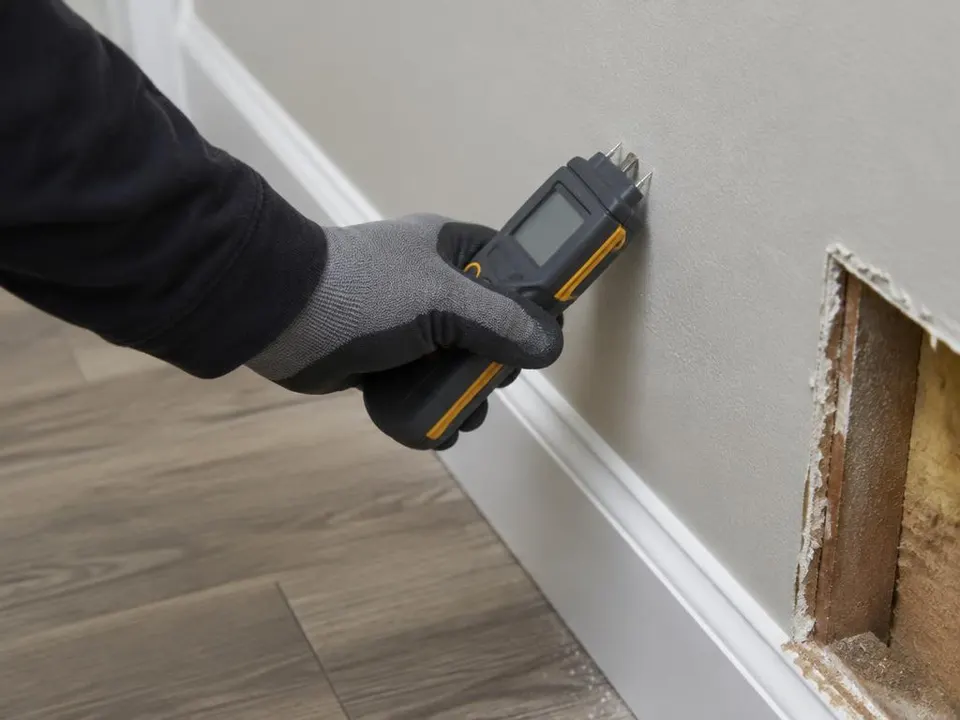
What does a surface appearance fail to tell us?
EPA explains that wood, drywall and carpet can remain wet after flooding and warns against sealing a flooded wall cavity before it is dry inside. The flood context matters: the warning suggests an evidence question, not a mold or wet-wall diagnosis for this house.
What should be requested from a professional?
Ask which surfaces and underlying materials were examined, what observations justified drying or removal, and what demonstrated completion. Avoid peeling vinyl, removing trim or handling wet appliances as a self-inspection.
Stay away from the affected area, do not touch electrical switches, outlets or appliances near water, and call a professional. If anyone is in danger, leave the area and call 911.
Where do these questions apply?
The vinyl-floor case asks about layers under a finish; the sink-cabinet case separates plumbing and cabinet work. Neither guide replaces an on-site evaluation.
Calls go to voicemail, not a live provider. Messages are recorded and transcribed after the greeting. You can email us instead.
Free for homeowners. We may be paid for qualifying referral calls.
Sources
- U.S. EPA, Flood Cleanup to Protect Indoor Air and Your Health (accessed October 11, 2026).
- U.S. EPA, Flood Cleanup to Protect Indoor Air and Your Health, drying section (accessed October 11, 2026).
- HomeAdvisor, How Much Does Water Damage Restoration Cost? (accessed October 11, 2026).
- California Contractors State License Board, Check a License (accessed October 11, 2026).